Days 7 & 8. No work done on 7, since I had IRL work. Now cards will pulse when triggered. Next step is to link these actions with the survivor to actually do something, and then let modifiers change how they behave.

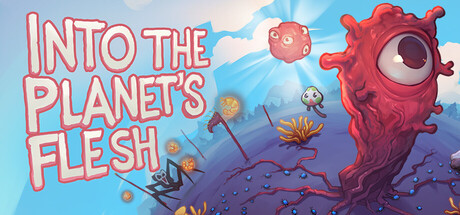
Hatch parasites and infest the earth in this incremental game.
Add to your wishlistDays 7 & 8. No work done on 7, since I had IRL work. Now cards will pulse when triggered. Next step is to link these actions with the survivor to actually do something, and then let modifiers change how they behave.
It seems quite easy to become demotivated by looking at other people’s progress and how fast they get along, while it can also be very helpful. I have to learn to find a good middle ground.
A recent video from IndieGameClinic describes that game design is not a set of rules to memorize, but a soft skill that isn’t as easy to quantify. My takeaway was that it’s something you do by playing games, and designing games yourself. Makes a lot of sense, though it doesn’t make game making any easier of course.
Days 5 & 6. Added in placeholder visuals for triggers, mods, and actions (these are the backbone of the mechanics in my game). I’ve also fixed some bugs, and added areas for basic card manipulation. The dashed lines do kinda look busy.
My current schedule is,
I guess it really doesn’t leave much dev time. I’ll have to see how I can optimize, and how much I will actually need. For now I really like coming to the library.
##Day 4. Added card stacking and fixed the graphics flicker. I also fixed some collision errors and layering issues.
Today started with a bit of cleanup, and planning regarding how card zones should work. I wanted to make the cards stackable as well, but I wasn’t able to get around to that today. Right now I just have some interactable cards that can be reordered. There’s a bit of flickering with the render commands, which I need to look into.
Here’s a gif:
Day 2. Cleaned up my codebase and started a new branch. Cleaned off the main menu and other game code to start from scratch. Also did some design tweaks and tried to get a clearer picture of the type of layout I need for the cards & building screen.
One notable difference between game jams and working on a project by yourself is that you don’t really question the initial idea (at least I didn’t) or whether you should even be working on this game. It’s a jam, so you just brainstorm for a bit, then get on with it. That’s kind of the point. The usual paralyzing fear and self-doubt don’t really kick in when there’s a collective deadline and hundreds of other participants working with the same theme. You tell yourself the quality of the result doens’t even matter, since this is a jam, and you’ll likely learn something from it. I told myself I’d adopt a jam mindset going into this solo …
[ READ ]Finished working on the mind map for now. Starting to feel it’s time to build a little code before I can continue planning meaningfully and not bog myself down. I’ll probably start some coding tomorrow.
Day 1 So I’ll be documenting the creation of a little game from start to finish on here, on a daily post basis, for experimentaion and motivation purposes. This was day 1. I did a lot of ideation and mind-mapping today to lay out the features I had in mind for this game, which fuses elements from games I enjoyed such as Stacklands, Path of Achra, and POE. It’s to be a survivors-like in terms of the combat, but will have configurable loadouts and build crafting based on card stacks like you see in Stacklands or Rocket Rats. Image of current mind map (it’s blurry, so don’t expect to read it): The process of brainstorming a design with a mindmap is new to me. While …
[ READ ]Game jams are usually the way I’ve found most success completing projects. I don’t think I’m 100% comfortable with exploring ideas at my own pace without external deadlines, at least not yet. One could argue that perhaps the distinction is vague at best, though, in which case I would rather like to have a way to explore my own paths without it being too overwhelming. One thing I can think of is self-imposed blocks of time, like hosting my own jams. The gap between excited ideation and actual playable game hasn’t closed enough times for me yet for it to be second nature. Ideally I would find the most fun and immersion in the process itself, exploring the possibilities in the mechanics, etc.
So income isn’t as steady now with some downturns with my main job. Need to consider how to play this with my goals for game development.
Extracted a bunch of snippets and techniques from the official chipmunk demos. I have no idea how I’ll be using them, but it won’t hurt to be familiar.
Learned about post/pre-solve as I integrate chipmunk physics into my codebase. Most of the steps are already done, thiugh the code is getting pretty bloated, and recompiling takes several minutes even on a mac. It was a great choice to go with lua in addition to this c++ codebase; it really helps with iteration speeds and simplifying things in my head so I can focus more on the gameplay as opposed to boilerplate and code structure.